Loading...

Our Products

Innovative Biolarvicides and Biopesticides for Sustainable Public Health & Agriculture

We Produce Biolarvicides and Biopesticides

TBPL is producing two types of Biolarvicides products,and one Biopesticide commercially known as Bactivec®, Griselesf® and Thurisave-24. These products have been effectively used in different parts of the world apart from Tanzania and Africa, others are Latin America and Asia. They have been used to successfully combat disease-bearing mosquitoes both preventively and as parts of integrated control programmes. They have also proved useful in epidemics of serious illnesses such as Yellow Fever, Dengue, Malaria, Human Filariasis, various types of Encephalitis and Onchocerciasis or River Blindness. They are also used to control infestations of other species of blood feeding diptera, whose bites cause discomfort to man both in communities and tourist areas It’s a modern technology of fight against the malaria vector while preventing natural resources.

Why biolarvicides

Environmentally safe

Harmless to non-target organisms, plants, and aquatic ecosystems where mosquitoes develop.

Highly targeted

Specific to mosquito larvae across urban, rural, industrial, and tourist settings in all climates.

Single application

One treatment kills larvae in stages I–III and early stage IV through ingestion — no residue left behind.

Programme ready

Integrates into environmental health and integrated vector management programmes seamlessly.

Our products

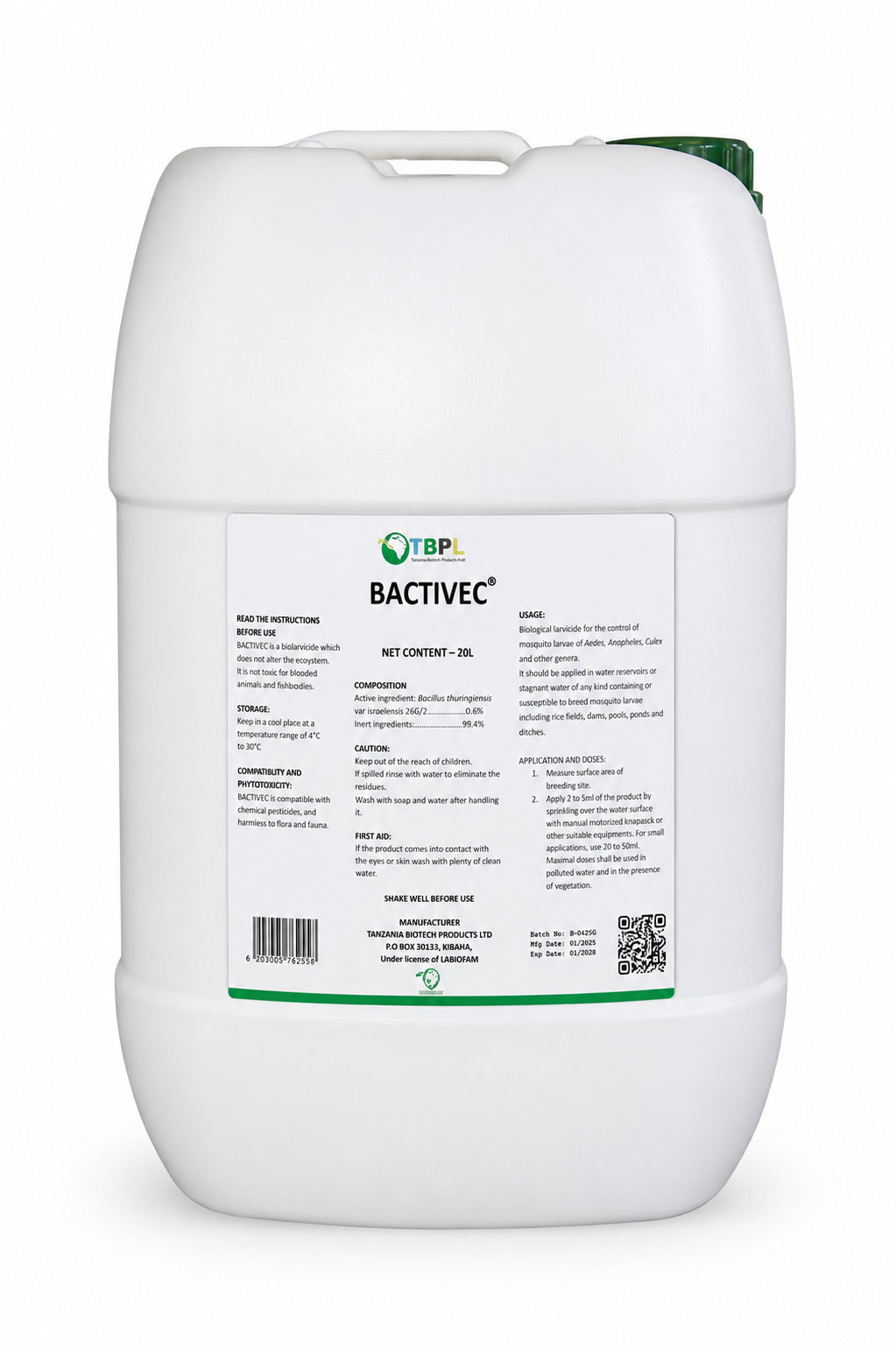
Bactivec®

Bacillus thuringiensis serotype H-14

Biolarvicide

Active organism: Bacillus thuringiensis israelensis (Bti), serotype H-14, strain 266/2 — biopotency ≥ 1200 ITU/mg

An aqueous suspension applied to mosquito breeding sites by aerial spraying, hand-operated compression sprayer, or drop dispenser. Bactivec® causes intestinal paralysis in larvae through toxic crystals produced by bacterial spores, delivering rapid control across open water bodies and domestic containers alike.

Kill speed

< 24 hours

Efficacy

100% larvae

Dosage — open water

2–5 ml / m²

Dosage — containers

1 ml / 50 L

  • Fast action: kills 100% of target larvae within 24 hours after ingestion
  • Suitable for aerial and ground-level application methods across all terrain types
  • Effective in open water bodies as well as domestic containers (30 ml pack: 1 ml per 50 L)
  • Proven in epidemics of Malaria, Yellow Fever, Dengue, and Encephalitis across multiple continents
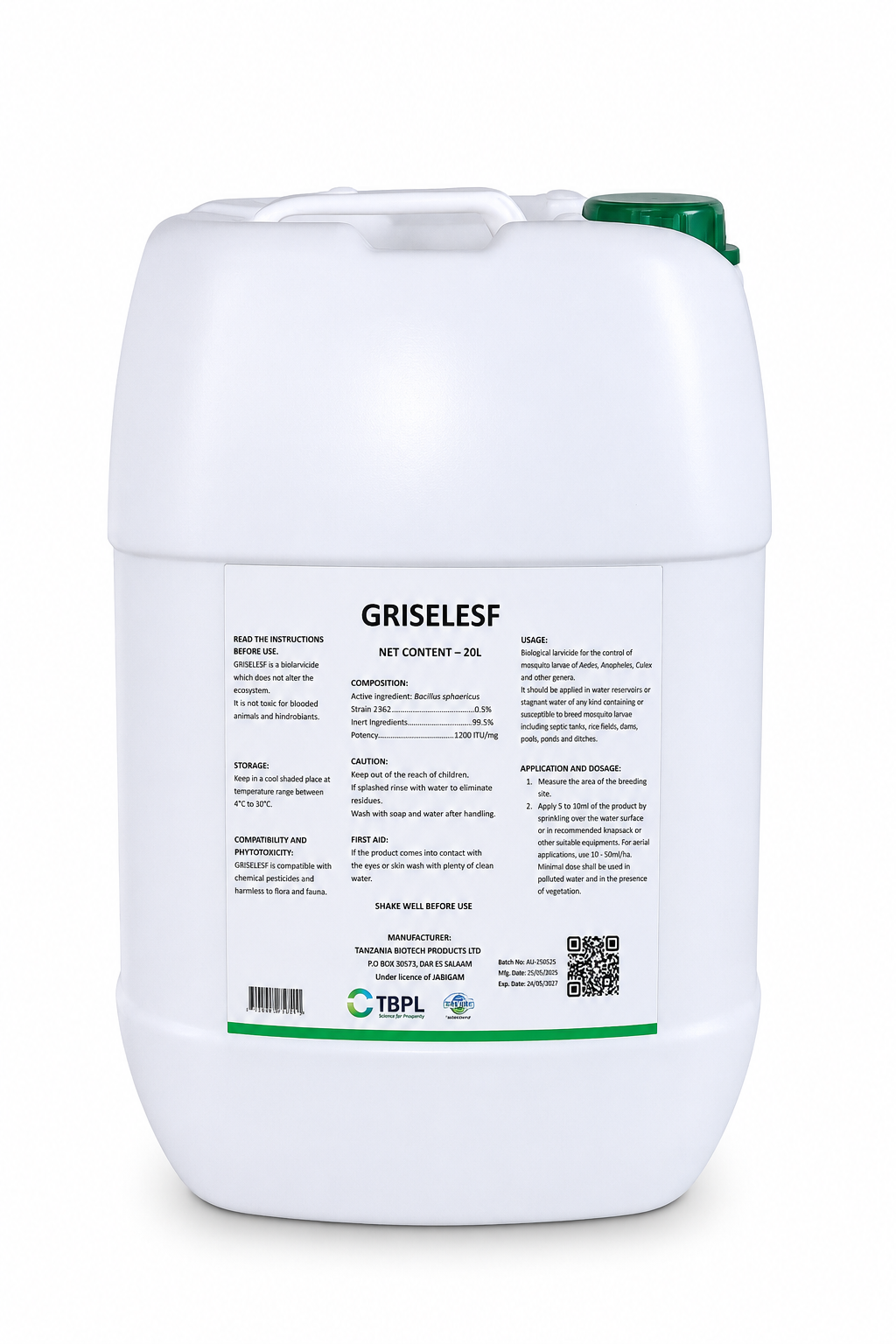
Griselesf®

Bacillus sphaericus strain 2362

Biolarvicide

Active organism: Bacillus sphaericus (Bs), strain 2362 — aqueous suspension formulation

Preferred for permanent breeding sites with clean or polluted water, Griselesf® is biodegradable and uniquely able to multiply within dead larvae — enabling natural recycling that extends protection well beyond a single application. Especially effective in highly polluted environments such as septic tanks and wastewater sites.

Kill speed

48–72 hours

Efficacy

100% larvae

Dosage

5–10 ml / m²

Residual action

Extended (recycling)

  • Controls Anopheles, Culex, Mansonia, Psorophora and other mosquito genera
  • Self-recycling in dead larvae delivers prolonged protection beyond the initial treatment
  • Superior performance in heavily polluted water — septic tanks, pit latrines, black wastewater
  • Biodegradable and innocuous to all non-target species and the broader ecosystem
Thurisave Product

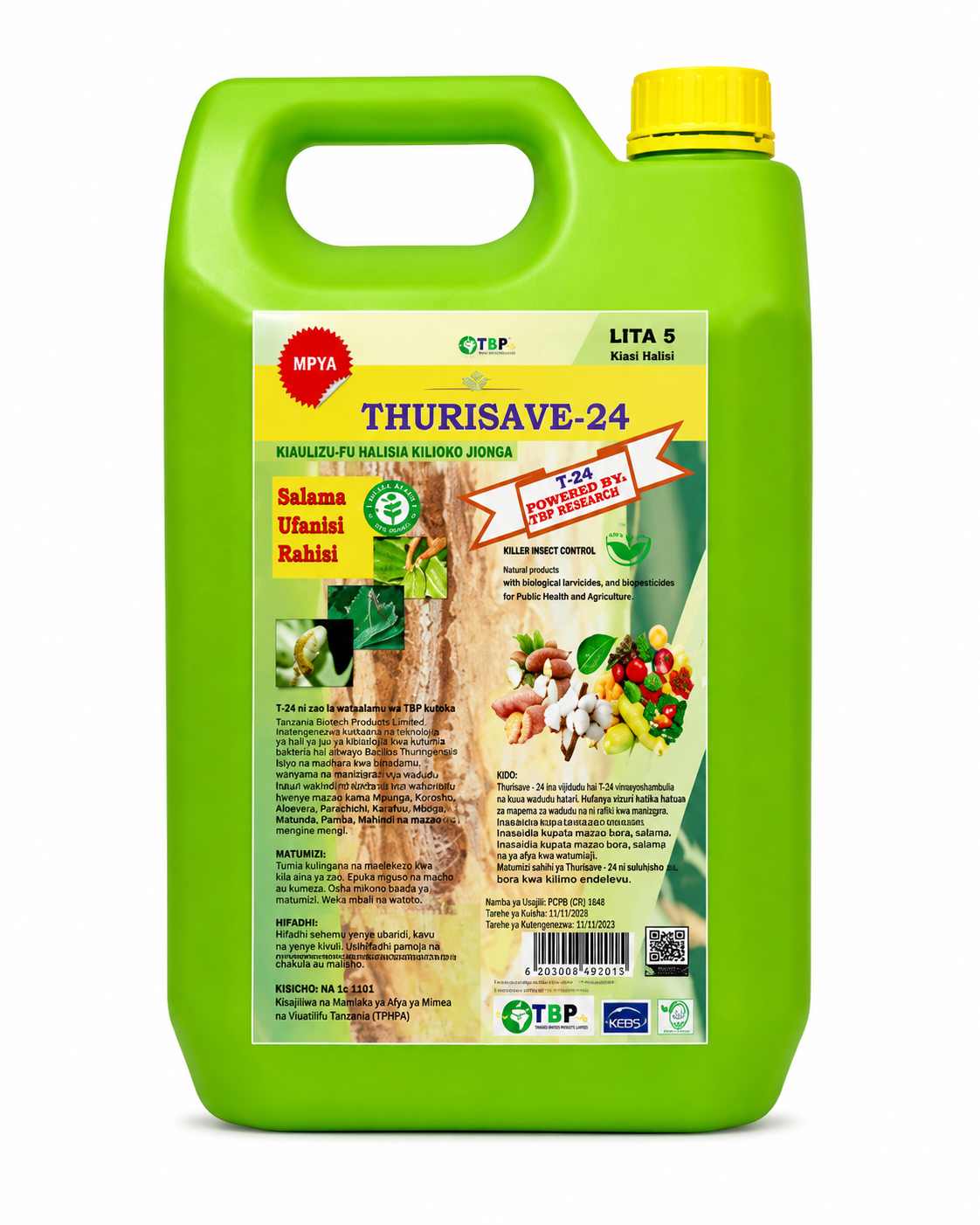
Thurisave-24

Bacillus thuringiensis subsp. kurstaki (Btk)

Biopesticide

Active organism: Bacillus thuringiensis subsp. kurstaki (Btk) — spores and crystalline proteins combined with approved co-formulants

A microbial insecticide developed by TBPL for controlling lepidopteran pest larvae on agricultural crops. Thurisave-24 targets pest insects specifically — the Btk toxin only activates in the alkaline gut of lepidopteran larvae, leaving all other organisms completely unaffected.

Mode of action

Btk spores must be eaten by target pest larvae to cause mortality. Once ingested, crystalline proteins dissolve in the larval gut's alkaline environment and release a toxin that destroys the midgut wall. The larva stops feeding within minutes. Bacteria then enter the bloodstream, causing full-scale infection and death of the insect within days.

General crops — mix rate

500 ml / 20 L water

Cotton — mix rate

650 ml / 20 L water

Field rate — general

2 L / acre (80 L water)

Field rate — cotton

2.5 L / acre

Maize Cotton Tobacco Cabbages Cassava Sweet potatoes Tomatoes Cucumbers
   Download
  • Controls fall armyworm and all lepidopteran caterpillars threatening field crops
  • Toxin activation is pH-dependent — works only in the lepidopteran gut, safe for all other species
  • Repeat spraying cycle when new pest signs appear — no build-up of chemical residues